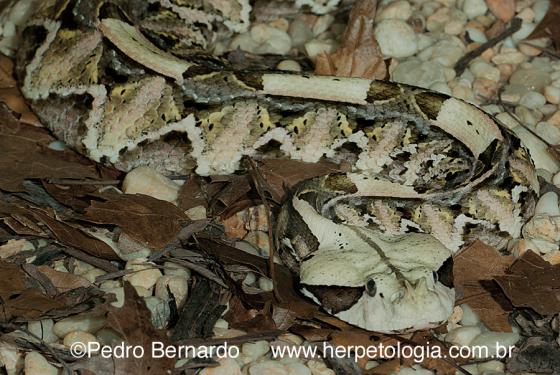
18 Août 2003 : Dans la ligne droite des négociations pour entamer une thèse de doctorat à l’université de Munich (Allemagne), mon futur directeur de thèse entreprit une visite de 10 jours au Bénin en Août 2003. Un an auparavant, je l’avais visité pour un mois, question de faire connaissance et de mieux apprécier mes capacités à entamer une thèse. Le but de sa visite était de découvrir le cadre dans lequel se feront mes travaux de terrain mais aussi de mieux peaufiner le sujet de ma thèse. Mon directeur de thèse débarqua au Bénin le 12 Août 2003. Pour faciliter le séjour, Prof. Sinsin dégagea quelques jours de son temps cher pour nous accompagner, avec en bonus la mise à disposition gratuite de la Prado bleu acquises pour le compte de son laboratoire (Le laboratoire d’Ecologie Appliquée). Notre mission devrait nous conduire à travers tout le Bénin, en partant de Calavi, pour visiter les forêts de Niaouli, Lama, Bassila, Wari-Maro, l’Ouémé Supérieur et l’Alibori Supérieur. Il fallait lui faire découvrir tous les types de forêts, afin de mieux organiser le sujet de thèse. Ainsi débarquions nous à Ouassa-Péhunco 6 jours plus tard, le 18 Août, pour visiter la fameuse Forêt Classée de l’Alibori Supérieur. Jusque-là, je connaissais cette forêt que de nom, car un de mes compagnons (Akis), aujourd’hui Colonel des Eaux et forêts, y avait séjourné pendant 3 mois dans le cadre de ses travaux de fin de formation pour l’obtention du diplôme d’Ingénieur Agronome. Il nous avait suffisamment briefé sur cette forêt, et les subtilités liées à son séjour et ses randonnées/inventaires dans cette belle forêt. Ainsi avions-nous décidé d’effectuer une sortie accompagnée de récoltes de champignons dans l’Alibori Supérieur. Nous prenions une route tortueuse et boueuse direction Est de Ouassa-Péhunco, qui nous conduisit, après environ 8 km, à une belle formation faite de beaux et gros sujets d’Isoberlina, de Uapaca , de Monotes et j’en passe. Pour nous, et par intuition, nous décidions d’y faire un échantillonnage opportuniste. Avec Prof. Sinsin et Prof. Agerer à mes côtés, nous commencions à fouiller les coins et recoins de cette formation. La délicatesse de notre échantillonnage résidant bien entendu dans le fait d’avoir notre champ de vision braqué plus dans le sous-bois, en tournant et retournant les débris végétaux, la litière et parfois les pierres, qui représentent les micro-habitats favoris des champignons cibles (les Tomentelles). A un certain moment de notre fouille, notre invité Prof. Agerer s’immobilisa pendant presque 2 minutes et m’observa. Au début j’ai cru qu’il attendait que je lui présente ce que j’aurais récolté afin qu’on essaie de l’identifier ensemble, mais la concentration avec laquelle il m’observa attira mon attention, je me redressai, et c’est alors qu’il s’exclamât, « Nourou, mais tu caressais un très joli serpent ». Je dis « Aah oui, mais où? », le Prof. Agerer s’avança vers moi et voulu toucher le serpent, qu’il croyait inoffensif du fait que je l’ai touché sans conséquences. Le Prof. Sinsin, qui n’était pas trop loin, lui interdit de le toucher, car ce serait assez dangereux. Je fixai mon regard à l’endroit indiqué sous mes pieds, et je vis effectivement enroulée sous mes pieds une grosse vipère de Gabon (Bitis gabonica) d’environ 7 cm de diamètre sur 1,30 m de long. Elle était là, sous mes pied, dissimulée dans la litière faite de feuilles sèches d’arbres présents sur place, la tête large et triangulaire aplatie contre le sol, en nous observant. Sa couleur grise sur fond noir (voir photo) était confondue avec celle des feuilles sèches, une stratégie de camouflage très efficace, et rien à priori ne pouvait alerter de sa présence. De tout mon corps, je commençai par trembler, une peur bleue s’empara de moi. Pendant presque 2 mn, je jouais avec cette bestiole si dangereuse, ce serpent possède en effet les crochets à venin les plus longs de tous les serpents, mesurant jusqu’à 5 cm de long, il faut alors craindre le volume de venin qu’il peut injecter à chaque morsure. Tout tremblotant je reculai, mais avec cette peur encore vivante en moi, à croire que j’ai tourné et retourné une vipère avec ma main droite nue pendant plusieurs minutes. Comment suis-je sorti indemne de cette rencontre inopportune ? Rien à priori ne pouvait expliquer cette tranquillité du reptile, était-il dans un état de torpeur ? Digérait-il pour avoir englouti un rat ? Toujours est-il que je m’en suis sorti intact, grâce à Dieu. Prof. Sinsin s’empressa de recueillir le reptile dans un sac Dangoté pour être déposé au Jardin Botanique et Zoologique de l’Université d’Abomey-Calavi. De cet instant, je n’ai plus eu le courage de continuer la fouille que 2 jours après. Et ceci avec un gros couteau que j’utilisais pour retourner les micro-refuges des Tomentelles. Quand même, j’ai failli y laisser ma peau. C’était la plume de votre dévoué NYS
August 18th, 2003: In line with the negotiations to start a doctoral thesis at the University of Munich (Germany), my future thesis supervisor undertook a 10-day visit to Benin in August 2003. A year earlier, I visited him for a month, in order to get to know each other and better appreciate my abilities to start a thesis. The purpose of his visit was to discover the context in which my fieldwork would take place, and also to refine the subject of my thesis. My thesis supervisor arrived in Benin on August 12, 2003. To facilitate our stay, Prof. Sinsin freed up a few days of his own time to accompany us, with the added bonus of the free use of the blue Prado acquired on behalf of his laboratory (Le Laboratoire d’Ecologie Appliquée). Our mission would take us all over Benin, starting from Calavi, to visit the forests of Niaouli, Lama, Bassila, Wari-Maro, Ouémé Supérieur and Alibori Supérieur. The idea was to show him all the different types of forests, so as to better organize the subject of my thesis. We landed in Ouassa-Péhunco (north of Benin) 6 days later, on August 18th, to visit the famous Alibori Supérieur Forest reserve. Up until then, I’d only known this forest by name, as one of my companions (Akis), now an officer at the National Forest Department, had spent 3 months there as part of his final training for his Agronomic Engineering diploma. He had briefed us sufficiently on this forest, and the subtleties associated with his stay and hikes/inventories in this beautiful forest. We decided to go on a mushroom-harvesting outing in the Alibori Supérieur. We took a winding, muddy road to the east of Ouassa-Péhunco, which led us, after about 8 km, to a beautiful forest composed of large, beautiful Isoberlina, Uapaca, Monotes and other trees. For us, and by intuition, we decided to do some opportunistic sampling there. With Prof. Sinsin and Prof. Agerer at my side, we began to delve into the nooks and crannies of this forest. The tricky part of our sampling was, of course, to have our vision aimed more into the undergrowth, turning and turning over the plant debris, litter and sometimes stones, which represent the favorite micro-habitats of the target fungi (the Tomentelles). At one point in our search, our guest Prof. Agerer stood still for almost 2 minutes and watched me. At first, I thought he was waiting for me to show him what I’d collected so that we could identify it together, but the concentration with which he observed me caught my attention, I straightened up, and it was then that he exclaimed, “Nourou, but you were caressing a very pretty snake”. I said “Aah yes, but where is it?”, and Prof. Agerer came up to me and wanted to touch the snake, which he thought was harmless because I had touched it without any consequences. Prof. Sinsin, who wasn’t too far away, forbade him to touch it, as it would be quite dangerous. I fixed my gaze on the spot indicated under my feet, and indeed, saw coiled under my feet a large Gabon viper (Bitis gabonica), about 7 cm in diameter and 1.30 m long. It was there, under my feet, hidden in the litter made of dry leaves from the trees, its broad, triangular head flattened against the ground, watching us. Its grey color on a black background (see photo), was confused with that of the dry leaves, a very effective camouflage strategy, and nothing at first sight could have alerted us to its presence. My whole body began to tremble, and I was scared to death. For almost 2 minutes, I played with this dangerous creature, which has the longest venom fangs of all snakes, measuring up to 5 cm in length, so you have to fear the volume of venom it can inject with each bite. Trembling, I stepped back, but with this fear still alive in me, as if I’d been twisting and turning a viper with my bare right hand for several minutes. How had I escaped this untimely contact unscathed? At first sight, nothing could explain the reptile’s tranquility: was it in a state of torpor? Was it digesting after swallowing a rat? In any case, thank God I escaped unscathed. Prof. Sinsin hastened to collect the reptile in a bag to be deposited at the Botanical and Zoological Garden of the University of Abomey-Calavi. From that moment on, I didn’t have the courage to continue digging until 2 days later. And that was with a big knife I’d been using to turn over the Tomentelles’ micro-refuges. Even so, I nearly lost my skin. See you very soon for more grapping stories. Yours devoted NYS.